In my time of growing up, nearly every rural community had a country store, most of them run by a sole proprietor. Today, country stores have largely been replaced by Dollar Generals, which don’t have the inventory of bigger groceries but enough on the shelves to serve most of the needs of their customers.
For years, Inman’s country store was run by the late Paul Lamb, who followed his father Marvin Lamb as the town’s storekeeper.
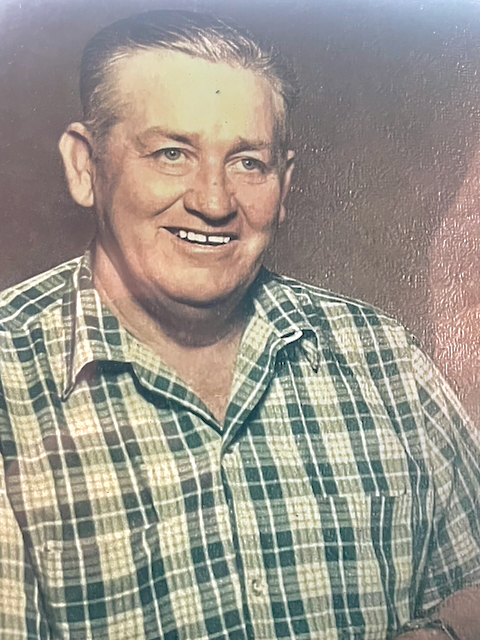
The late Paul Lamb
It really was a special place. When I was a little fellow, my grandfather Jim Minter Sr. was the Inman Postmaster and operated out of a little cubicle inside the store.
The mail arrived twice a day, delivered by a rolling sorting facility known as the Mail Bus. Inside the bus, a postal worker sorted mail as the bus traveled from Atlanta to Columbus and back, stopping at dozen of Post Offices along the way.
Many an evening meal at my grandparents’ house was delayed when the Mail Bus broke down. The bus, or a replacement, would eventually show up, proving the old adage that neither snow nor rain, nor heat nor gloom of night nor engine trouble nor shorted wires stays these couriers from the swift completions of their appointed rounds. (OK, I added a couple of scenarios that only applied to the mail bus.)
Since my grandfather was at the store so much, I spent a lot of time there. (I wasn’t the only one; it was a popular hangout for young and old alike.) Even as a youngster I admired how hard Paul Lamb worked to have a successful business.
Lots of Inman folks bought most of their groceries and farm supplies from Paul. If there was some item an Inman resident needed for their evening meal and he didn’t have it on the shelves, Paul would send his wife Mary Alice to the bigger, better-stocked stores in Fayetteville to get the needed item and deliver it to his customer.
When my brother and I started growing vegetables to sell, Paul would sell our watermelons and other produce, and he was very fair in our business dealings. He also paid us either five or 10 cents per soft drink bottle we picked up off the side of the road and cleaned up. (The price depended on the brand of the drink.)
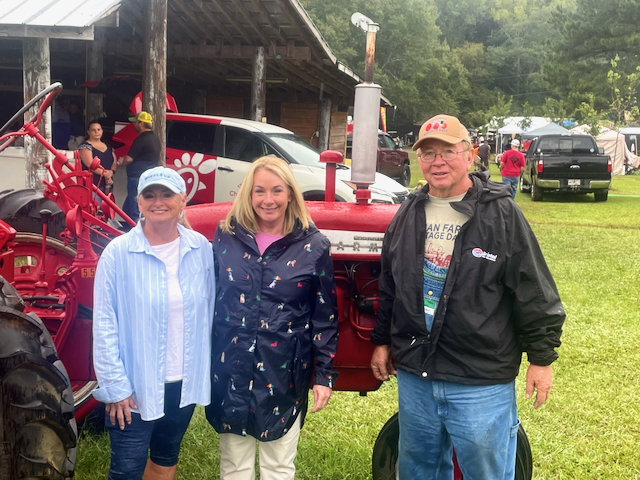
Paul’s tractor with his daughters Mary Harn (left) and Paula Caras (center)
Paul seemed to take a special interest in the farming my brother and I were doing at an early age. Once I was about to get shortchanged on a deal involving some hay. Paul found out and intervened. I got every penny I had coming. I never forgot that.
Paul was a young man, barely 50, when his health began to fail. I was 15 or 16 years old at that time, and he offered to sell me his Ford 3000 tractor for a reasonable price. He offered to finance it at terms I probably could have afforded. Looking back on it, he had more confidence in me than I had in myself.
Buying the 3000 seemed like a mighty big challenge at the time, so I passed. (Hugh Huddleston bought it, and his son Bill still has it.)
I did acquire some other farm equipment, including a fuel tank full of diesel fuel, some cultivators and other tractor parts. Some he just gave me.
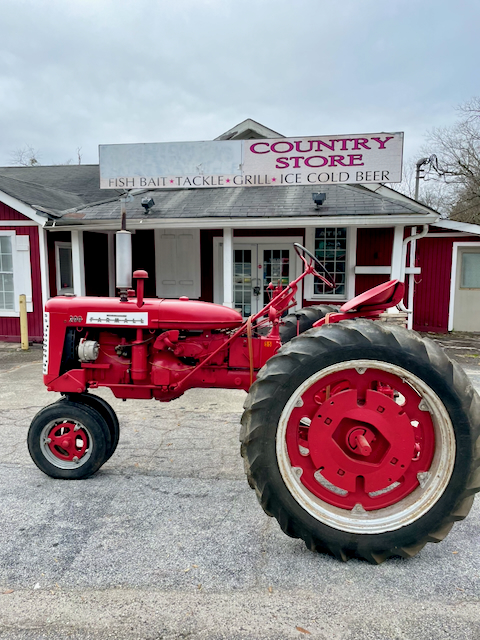
Paul’s tractor in front of his old store.
He called me to a meeting at his house not long before he died. He explained to his family about our deal. They abided by it, and I did too.
After he died, his store – and Inman as a whole – was never quite the same. Many others also still have fond memories of him and his store, as evidenced by the number of comments I see when a photo of his store shows up on Facebook more than 50 years after he died.
I did wind up with one of his tractors, a Farmall 230 that he sold to Buck Morris, who often talked about how that when he and Betty Jo first married, Paul let him charge items at the store and then let him work off the balance on his account.
I bought the tractor when Buck died. I am honored to be the custodian of a tractor that was owned by two people that meant the world to me.