In recent weeks, we’ve made numerous trips to the Forest Park facility formerly known as the Atlanta State Farmers Market to pick up loads of Fraser Fir Christmas trees. Now place is called the Atlanta/Clayton County Produce Terminal, which more accurately describes its current function.
All but gone are the days when farmers like us backed their trucks up to spaces in the rows of concrete-covered awnings and sold their produce on the other side of the dock to retail and wholesale customers.
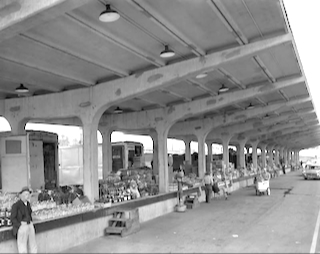
(The Farmer’s Market in its heyday. Photo credit: Vintage Atlanta Facebook page)
The 150-acre market complex opened in 1959 under the leadership of then-Georgia Commissioner of Agriculture Phil Campbell. The facility, once regarded as the largest of its kind in the world, replaced the old “Produce Row” on Murphy Avenue.
The new market was built on land purchased from the late Hewlett Thames, who then bought property alongside the Flint River in Fayette County and established Flintwood Farms, a dairy farm as fine as any in the country.
My earliest memories from under the sheds are going there with my great-uncles Donald and William Harp.
They were widely known for the quality of the produce they grew, and it sold well. Still, there were times they didn’t sell out before nightfall, when business slowed to a crawl. Then it became necessary to spend the night and wait until the local store owners began making their buying rounds in the wee hours of the morning.
I didn’t realize at the time how aggravating that must have been for the grown folks, but for the kids like my cousin Mickey Harp and others that got to go along to the market, the nights spent there were a big adventure.
I was always fascinated by the cool trucks lined up, loaded with watermelons and such. As a kid, I didn’t know the farmers as well as I knew the trucks.
Some that stood out were the early 60s Ford F600 trucks that were lettered: Alday Farms, Donalsonville, Ga.
I assume those trucks were owned by some of the six family members that were murdered by burglars in 1973 as I never saw the trucks again after that awful day.
After I turned 16, my brother Rob and I would take our squash, cucumbers, okra, sweet corn and other crops and get our own spot under the sheds. We’d wash and grade our squash and cucumbers according to size at home, then place them in baskets holding either bushels, half-bushels, pecks and half pecks when we set up under the sheds. We bought our baskets, paper sacks and other supplies from the Hamper House, which is still in business on the market and now run by the grandsons of Troy Matthews, who sold to us back in the day.
Housewives were our major customers, and we had to compete with other farmers and the much-derided “pen hookers” who didn’t grow their own crops but managed to wrangle a selling spot in the area set aside for farmers.
One of my most memorable trips was in the summer of 1978. I was selling sweet corn midway down Shed 6, near where the market restaurant still operates today. A lady customer pulled up in tears. She had just heard on the radio that Elvis Presley had died.
In June of 1976, Mickey Harp was at the market, selling with his dad, Donald, when Donald was paged for an emergency phone call. He learned that Mickey’s uncle and Donald’s brother William “Big Bill” Harp had died suddenly of a heart attack. He never married and was a favorite uncle to all of us.
(Ricky Harp and I were putting grout in his parents’ swimming pool that day when we saw an ambulance speeding toward Inman. Ricky’s dad Johnny went to check and returned with the shocking news.)
But overall, it was mostly good times under the sheds. Joanne loved selling there, and Stephanie went along for many a trip there. (A feisty woman with a beautiful young daughter make a potent sales force.)
We eventually shifted to selling most of our crops to John Shipp Produce, a wholesale buyer located “on the hill” as it was referred to. (The wholesalers actually are on a hill overlooking the sheds.)
We also sold to “Cowboy” Gregory, whose son Nickey now runs one of the biggest businesses on the market, and to Clyde Alexander, who’s still at it, now assisted by his sons Morgan and Griff.
As time went on, less and less produce was sold under the sheds, for a variety of reasons. In my opinion, more and more of our “housewife” customers took outside jobs, and home-cooked fresh produce was replaced by fast food from restaurants. And the quality of produce sold in grocery stores improved dramatically.
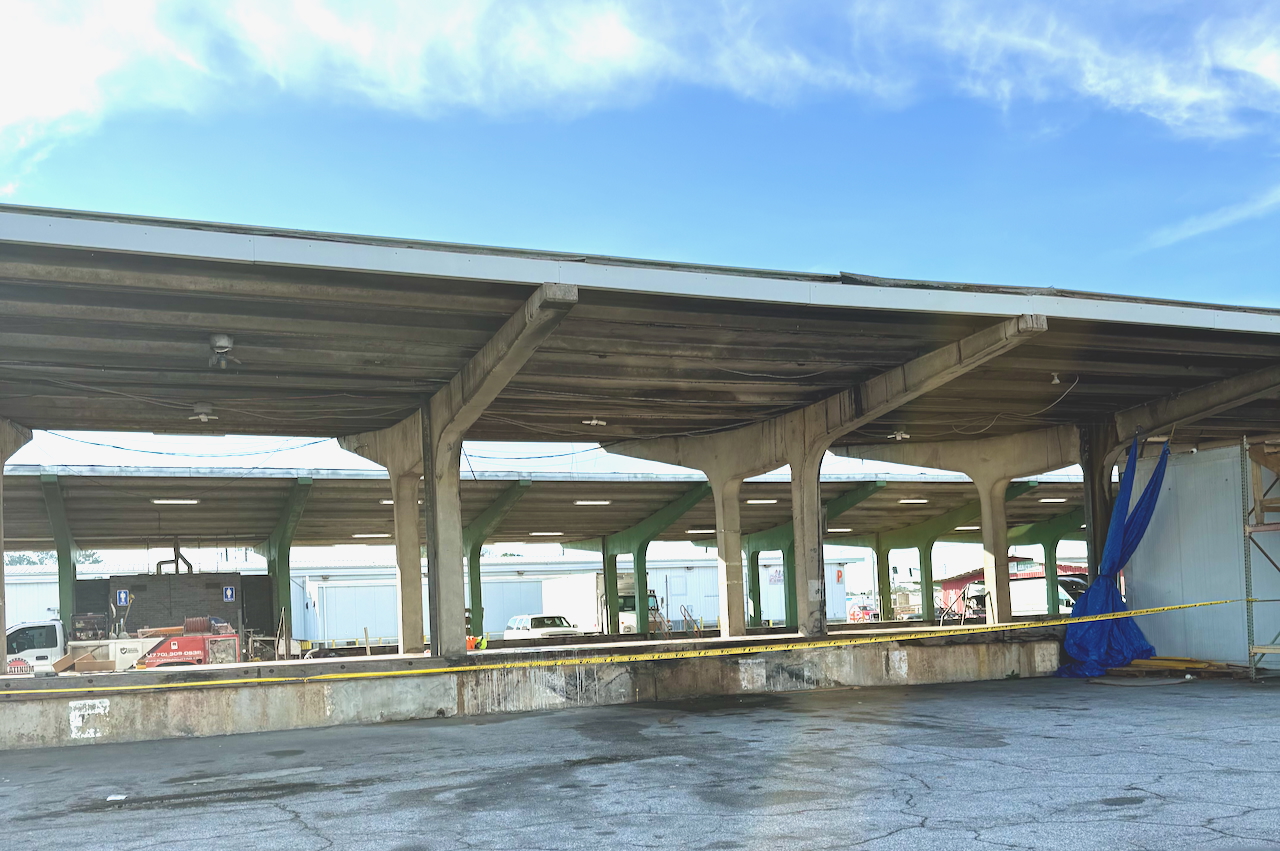
(The sheds as they’re being torn down – Dec. 2025)
Today, many of the sheds have been torn down, replaced by modern, enclosed, wholesale food handling facilities. The retail businesses remaining under the sheds consists mostly of sellers of ethnic foods.
Those vendors work hard and provide quality produce to their customers. I’m proud for them, and they don’t even have to spend the night to sell their goods.